Monday, 14 August 2017

The Phenomenon That Is El Niño

The world is like a box of chocolates. You’ll never know what you get with each passing day. Sounds familiar, right? It is an edited version of a famous line from an equally famous all-time favorite movie. Depending on what part of the world you are in, there are attractions and phenomenon exclusive to that place only. It is the same with weather disturbances. Other nations deal with frequent hurricanes or tornadoes while others have to live with constant movement in the ground a.k.a. earthquake.
It is time to know more about a weather phenomenon that isn’t as talked about as the others but just as savage – El niño. It has its counterpart, La Niña. They both make up the El Niño-Southern Oscillation (ENSO) cycle, the scientific term for temperature fluctuations between the atmosphere and the ocean in the east-central Equatorial Pacific that happens every few years or so. La Niña is known as the cold phase while El Niño is the warm phase. The latter is characterized by warm Pacific waters usually in the month of December and may likewise affect wind shear, which is the blowing of air currents from a lower altitude in a different direction than that of higher winds in the atmosphere.

A weak El Niño pattern will develop in the Pacific, meaning there’s the likelihood of a wetter summer in the Midwest, Commodity Weather Group, the Bethesda, Maryland-based forecaster, said in a seasonal report Tuesday.

The wetter-than-normal weather likely will have a negative effect on planting but a positive impact on crops that get planted due to ample moisture, the forecaster said. The El Niño pattern will mean warmer waters near the Baja Peninsula and relatively cooler waters in the Pacific Northwest.

“The central (and) southwest Midwest is at most risk for slower-than-average corn (and) soy seeding, but rains aid moisture for the heart of the Corn Belt heading into summer,” CWG said in the report. “Summer temperature outlook trended warmer in the eastern U.S., but mostly unchanged in the Corn Belt, keeping the threat for notable Midwest-focused heat low this season.”

(Via: http://www.agriculture.com/weather/future-conditions/weak-el-nino-may-mean-wetter-than-normal-summer-midwest-weather)

The Pacific Northwest should brace for the incoming wet weather later this year because of a weaker El Niño phenomenon. Storms are more likely to form as there is more energy in the warm water during El Niño.

Generally speaking, there is a link between El Ninõ and increased wind shear in the tropical Atlantic Basin. Wind shear limits both the development and strength of tropical cyclones.

This is one of the factors that contributed to the 2017 Atlantic hurricane season outlook issued recently by Colorado State University, which calls for a slightly below average number of named storms and hurricanes.

The most recent El Niño occurred in 2015 and that year the Atlantic hurricane season saw a slightly below-average number of tropical cyclones, with 11 named storms, 4 hurricanes and 2 major hurricanes. The 30-year average is 12 named storms, 6 hurricanes and 2 major hurricanes.

If El Niño develops, parts of the U.S. could see cooler-than-average temperatures later in the summer, according to Dr. Todd Crawford, chief meteorologist with The Weather Company.

Keep in mind that El Niño is only one factor of the atmospheric pattern, but it can play an important role in the weather in the U.S.

(Via: https://weather.com/news/climate/news/el-nino-possible-late-2017-enso-neutral-spring)

Weather changes have a bigger impact in our lives than just having to make up your mind whether to bring an umbrella or not to work or school or whether you should dress up or not when you go outside. The weather is also a big factor when it comes to crop production. It can easily spell a good or bad yield and monetary profits or losses. Others are hoping that the expected El Niño phenomenon this year will be the answered prayer to drought issues in the West Coast but sorry to burst your bubble because it likely won’t have that much positive impact since most of the runoff is headed to sea where people can no longer benefit from it.

The following article The Phenomenon That Is El Niño See more on: SEMP.us


source https://www.semp.us/the-phenomenon-that-is-el-nino/

Monday, 7 August 2017

Eco-Travel For Your Next Summer Getaway

The sun is up and summer is fast approaching. Many of you can’t probably wait to hit the beach after being cooped up inside your homes during the long, cold and bleak winter months. Not seeing the bright and blinding light of the sun can make people feel down and depressed. So, let us all rejoice with the coming of spring because we know summer is just around the corner and you finally have an excuse to use your vacation credits for a much-needed travel time.

If you are not a fan of crowds, eco-traveling is a welcome reprieve from your busy scheds and modern life. Going the less traveled road can open up your eyes to the beauty of nature. It is likewise less expensive than going to more popular tourist attractions. However, just be prepared to enjoy the entire experience, both the good and the bad. You can’t always expect a comfy and convenient life when traveling this way but you get to immerse with the people and the local culture that can leave you with many wonderful memories you’ll cherish for your lifetime.

As the largest global service industry, tourism can—and should—play a significant role in conservation and environmental sustainability. That was the message that U.N. Secretary-General Ban Ki-Moon delivered on World Tourism Day in 2012. “One of the world’s largest economic sectors, tourism is especially well‐placed to promote environmental sustainability, 'green' growth and our struggle against climate change through its relationship with energy," he said. 

Robert Baden-Powell, founder of the world Scouting movement, was an early proponent of not only treading lightly when you travel, but also doing some good while you're there. In his last message before his death in 1941, Baden-Powell neatly summed up his philosophy: “Leave this world a little better than you found it.” It's a sentiment that anchored the "Leave No Trace" outdoor/camping ethos that took root in the 1960s, and it can easily serve as a motto for ecotourists and ethical travelers alike.

(Via: http://www.alternet.org/environment/10-top-eco-destinations-north-america)

While we all want some well-deserved R&R for all our hard work, it doesn’t mean we can do whatever we want during our dream vacation. We leave our footprints in every place that we visit. Let us always remember to leave no trace especially when communing with nature. Leave the place as it is just like when you got there. Every piece of trash you throw messes up the natural ecosystem and significantly affects the wildlife in a bad way.

Just as the 100th birthday of the National Park Service is casting a spotlight on U.S. national parks in 2016, we can expect an enhanced emphasis on ecotourism throughout 2017—declared the International Year of Sustainable Tourism for Development by the United Nations.

To be sure, the idea of ecotourism isn’t a new one—it’s already known as one of the fastest growing segments in the tourism industry. Put that together with family travel—another of the industry’s rapidly growing segments—and the time is ripe for family vacations that include ecotourism.

At its core, the concept of ecotourism is simple. According to The International Ecotourism Society (TIES), ecotourism is defined as "responsible travel to natural areas that conserves the environment, sustains the well-being of the local people, and involves interpretation and education."

And, as with so many segments of tourism, the line blurs easily, with ecotourism overlapping with adventure travel, wellness travel and voluntourism, to name just a few other popular segments that often go hand-in-hand with ecotourism.

(Via: http://www.travelweekly.com/Strategic-Content/Family-Ecotourism)

While most people think of eco-travel as a thing for solo travelers or people who don’t have added responsibilities in life like a spouse and kids, you’d be surprised to learn that eco-travel also works for families who love to travel. Family travels should not revolve around trips to theme parks, resorts or cruise ships because developments in ecotourism ensure families, especially the ones with kids in tow, can still have the time of their lives under the bright skies at night without much modern distraction.

Kids actually love nature and active play does a lot of good for their normal growth and development. No kid will ever shy away from playing in the mud or learning more about unknown animals and fauna in some of the nation's popular national parks. It is why eco-travel should be something your family should be doing this summer because the threat of climate change, pollution, and global warming are wreaking havoc on the planet and we may never be able to see some of these species in the years to come. So, the best time to do it is now.

The blog article Eco-Travel For Your Next Summer Getaway Read more on: SEMP.us


source https://www.semp.us/eco-travel-for-your-next-summer-getaway/

Monday, 31 July 2017

National Parks: The Heart Of America

National parks are a big part of America. These natural wonders symbolize the richness and diversity of the American land and tourists flock by the dozens. These ecological landmarks aren’t just popular as tourist attractions but also help generate money that boosts the economy. And the best thing about these national parks is that they scattered all over the country, so you are sure to find your own piece of paradise in the many states of America wherever you may be.

National parks are mainly here because of conservation efforts. In a world that is rapidly modernizing, we should make an effort in protecting these pieces of land that serve as the last natural frontiers here on the planet. They are also often open to guests while others require making arrangements beforehand especially during peak season. You can camp for a night or two and enjoy plenty of outdoor activities to recharge your senses before returning to your daily grind.

With many public lands next door to some of the country’s most visited canyons, waterfalls, and mountain peaks, these lesser-known natural gems are a great way to avoid the crowds while still getting to experience all that nature has to offer. Whether your national park adventure is during National Park Week (April 15-23), in the summer or a last-minute trip, pair it with one these neighboring public lands, chosen by the U.S. Department of the Interior.

(Via: https://www.usatoday.com/story/travel/experience/america/national-parks/2017/04/11/public-lands-national-park-pairs/100303188/)

It is common knowledge that national parks are properties of the state. They are a big part of our rich history and a shining example of natural diversity you can seldom find in modern America. Popular ones are the Grand Canyon and Yosemite National Park that attracts thousands of visitors yearly. However, some parks are also suffering from climate change and pollution that hastens erosion making preservation extra harder.

President Trump is donating $78,333.32 — his salary since taking office Jan. 20 — to the National Park Service, officials said Monday.

White House spokesman Sean Spicer opened his daily press briefing by presenting a Trump-signed check to Interior Secretary Ryan Zinke and Tyrone Brandyburg, superintendent of the Harpers Ferry National Historical Park in West Virginia.

"We're going to dedicate it and put against the infrastructure on our nation's battlefields," Zinke said. "We're about $100 million or $229 million behind in deferred maintenance on our battlefields alone."

(Via: https://www.usatoday.com/story/news/politics/2017/04/03/donald-trump-national-park-service-ryan-zinke/99989136/)

Trump may be a man of contradictions. Despite his many flaws, this unexpected support from President Trump can do wonders in advancing wildlife conservation efforts and in protecting the parks from natural threats.

Climate change is killing trees, threatening birds and mammals, and leading to devastating wildfires across the 85m acres run by the NPS. Patrick Gonzalez, the principal climate-change scientist at the NPS, told me about rising sea levels (there’s been a 22cm rise across the bay at Golden Gate National Recreation Area, California, since 1954); high ocean temperatures bleaching and killing coral in Virgin Islands National Park; and major vegetation types and wildlife moving upwards.

Yosemite saw subalpine forests moving up into subalpine meadows over the last century and small mammals, including mice and ground squirrels, shifting 500m uphill. “As temperatures warm,” he said, “things on higher elevations get warmer and things on lower elevations move up.” Bark beetles, once killed by cold winters, are now surviving and wreaking havoc with trees. “You go to Rocky Mountains, Yellowstone… hillsides formerly covered in a green canopy of trees are now just rust-coloured areas.”

If no action is taken, the glaciers of Glacier National Park may melt away; Joshua trees could die out in the park that bears their name; bison may disappear from Yellowstone; and the ancient cliff dwellings in Mesa Verde in Colorado could crumble away.

(Via: https://www.theguardian.com/environment/2017/jan/15/call-of-the-wild-can-americas-national-parks-survive)

There are still countless setbacks and challenges along the way. Despite Trump’s generosity in donating a portion of his salary as US president to the National Park Service, the various budget cuts he imposes also hurt the environment leaving it devoid of the funding it needs to support their conservation efforts. For starters, Trump does not believe in climate change and thinks of it as a hoax. Even some members of his cabinet are science skeptics. If this goes on, America has a lot to lose without these natural wonders that are only exclusive to this part of the world.

The following article National Parks: The Heart Of America was first published to SEMP.us Blog


source https://www.semp.us/national-parks-the-heart-of-america/

Wednesday, 26 July 2017

Gadgets For Your Survival

Mankind has flourished because we evolved to be the most superior species on the planet. Our cognitive superiority enabled us to utilize various resources of the planet to our advantage. Our mantra had always been “the struggle for existence and survival of the fittest.” Whatever unfavorable natural conditions we face in life, humans should do their best to overcome them and emerge victorious for the continuation of the human race.

And even though we are living in a modern world, we still essentially struggle to live and keep our act together. Aside from global competition, there are disasters that threaten our very existence. And as such, you should take the concept of disaster preparedness seriously. When preparing for disasters, you need certain gadgets to help ensure your survival.

Also on Thursday, thousands of Utahns across the state participated in the Great Utah ShakeOut, a yearly drill to prepare residents in case a major earthquake hits.

Showcasing Utah’s desire to be prepared is Preppercon. Along with booths of various objects — guns and ammunition, knives solar energy products, food storage, massive water tanks, tactical gear and self-reliance books — there are experts like Holladay teaching their tricks of the trade.

Scott Stallings, the chief executive officers and co-founder of the event, said there has been a steady growth of interest. This year, nearly 200 vendors set up booths — about 60 more than two years ago.

He said the origins come from the fact that needs in emergencies are simple but often overlooked. The event includes 80 classes taught by experts in all sorts of fields from food storage to emergency first aid. The goal is to keep people everywhere prepared for any disaster scenario that may arise.

(Via: https://www.ksl.com/?nid=148&sid=43957129)

Everyone should be aware of what tools can help them with survival when worst comes to worst. Take the time to equip your emergency kit with survival tools to ensure you don’t miss out on any important gadgets that can save your life or make it easier when life is out of the ordinary.

Here are five things that will integrate into regular business attire seamlessly – and will give you military-grade survival tools so that you can be equipped if a crisis hits.

Tactical flashlight: the Cortex Compact

Gritzbaugh’s first piece of advice is a “small, tactical light with multiple battery options – you never know when you’ll end up in a dark street or power outage.”

Tactical pen: the Impromptu

Pens are something people carry with them everyday anyway. But this is a pen that could save your life.  

Stabby pens are a must-have with tactical professionals and should be a must-have for folks who want to survive threats.

Multi-tool: the Dime

The military takes advantages of multi-tools all the time. Rather than carry a whole bunch of unwieldy tool options, service members like that a multi-tool puts all those options in one lightweight, organized device.

Gritzbaugh pulled out of his pocket the Gerber Dime that he carries everywhere. As he explained, it is “a travel friendly multi-tool for every little problem you encounter along the way.”  

Watch with a compass: Suunto Vector

Most folks rely on a phone equipped with GPS and a mapping app to navigate around these days.

Why do you need a watch with a compass? Because phones die and signals get lost.  Batteries can drain very quickly in a crisis. A watch with a compass is always a good idea when you are trying to get away from bad stuff and find your way home.

Grab and go bag: Timbuk2 Parkside Laptop Backpack

There is no shortage of great tactical professional bug out or covert-carry bags these days. But a business professional does not necessarily need all those bells and whistles – nor the hefty price tag that often goes along with it.

Gritzbaugh explained he carries the Timbuk2 Parkside Laptop Backpack. It fits in seamlessly to a work environment but also is fit for purpose to carry bare necessities in a crisis.

(Via: http://www.foxnews.com/tech/2016/06/13/be-prepared-for-anything-with-these-5-survival-tools.html)

As much as possible, stay away from buying or stocking on survival gears that are dependent on batteries or electricity in order to work. Remember that you can improvise and do a lot of things in the face of disaster if you have the right tools with you. Having essential survival tools like knives can help you build shelter, chop wood for fire and heat and even for protection. Make sure you have one on your list.

Fire is also an important element to help you cook food or stay warm and comfy during cold nights. While the primitive fire-making technique of rubbing two stones together in making fire is effective if you know how to do it right, it will be difficult to do so if everywhere around you is damp or wet. Having some handy matches or lighter and extra lighter fluid are truly lifesavers.

And let us not forget hydration tools. We can live without food for days but only hours without water. Having water bags and bottles for water collection and water filters or water filtration tablets can save you from a bad case of diarrhea and ensure you stay well-hydrated all the time. There are many more survival gadgets any survivalist will ever need, so do your research and gradually build your emergency kit because you can never tell when you’ll ever need it.

The following blog article Gadgets For Your Survival was initially published on https://www.semp.us/


source https://www.semp.us/gadgets-for-your-survival/

Monday, 24 July 2017

Why Volcanoes Erupt?

The earth is full of wonders, both good and bad and natural and man-made, we can never fully comprehend. The beauty of nature is unparalleled while its wrath is a force to be reckoned with. In our lifetime, we will face countless disasters that we can barely remember them all. However, a few will stand out in our memories. A fine example is a volcanic eruption. If you live in an area where there is an active volcano nearby, you can relate to the stress and challenges posed by an erupting volcano.

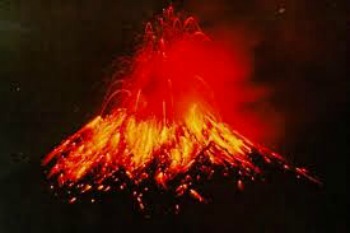
The build-up of pressure and density underneath causes the volcano to erupt. It is earth’s way of cooling off by releasing too much internal heat and pressure. These eruptions can trigger earthquakes, mudslides, rock falls and even flash floods. It also poses health risks due to the excessive cloud of ash and dust that fills the air. People living nearby should evacuate and move somewhere farther and safer until the threat dissipates.

With the help of modern technology, man can now predict future volcanic eruptions and help them prepare and save countless lives in the process.

What will the satellites see?

When magma rises up from inside the Earth, it causes the ground above it to swell.

While you might not be able to see this standing on the Earth, scientists say this can be spotted from space.

So the satellites will look out for things like changes in the shape of the ground near to volcanoes, which might suggest when magma is rising up.

They will send what they see back to Earth using a high-speed laser link.

What difference will this make?

If scientists spot changes in the shape of the ground near to a volcano, they can alert people living in those areas.

It won't mean that an eruption is definitely going to happen, but it means that people can be more prepared in case it does.

At the moment, there are about 1,500 active volcanoes in the world, but only a small number of those are heavily monitored.

(Via: http://www.bbc.co.uk/newsround/39654167)

Volcanoes can stay dormant for a long period of time and only become active when the pressure underground is too much and it desperately needs to release internal heat and pressure. Over the centuries, civilizations have been wiped out because of major volcanic eruptions and it is also making people anxious nowadays when numerous volcanic eruption is coupled with the threat of global warming and climate change.

According to Volcano Discovery, 35 volcanoes are either currently erupting right now or just recently erupted all over the world. There are even more volcanoes with eruption warnings and tons of other volcanoes that are active, meaning they could technically erupt at any minute (though unlikely).

According to USGS: “Scientists use the term magma for molten rock underground and lava for molten rock (and contained gases) that breaks through the Earth’s surface.” At the moment, something in the Earth is causing magma to be pushed up in numerous volcanoes worldwide.

(Via: http://www.collective-evolution.com/2017/03/03/volcanoes-erupting-all-over-the-world-is-something-happening-to-the-earths-core/)

While many of us don’t like volcanoes because of the risks they pose especially with the lava flow and volcanic fumes, volcanic eruptions actually do some good to the environment. Minerals in volcanic ash help plants grow especially when the ash is still soft. But regardless of the role volcanoes have in the planet, we can’t deny the fact that volcanic ash, lava, and magma don’t mix well with human life. And as such, you should take precautions especially if you leave nearby.

So how then should the public prepare before and respond during, and recover after volcanic eruptions?

Before

  1. Each person should be aware of the dangers that volcanic eruptions. Volcanic eruptions are expected to caush ash falls which in turn could harm humans, animals, plants, equipments, and structures. Beyond that, fine volcanic ash is also often respirable which can cause pulmo-respiratory diseases if inhaled over prolonged period.
  2. Prepare all necessary things to bring in case of evacuation: gas mask or clean cloth, candles, matches, flashlights, extra batteries. Don't forget to prepare your disaster kit ahead of time.
  3. Know which areas are covered by the danger zones.

During

  1. Stay calm. Cover your nose and mouth with mask or clean cloth.
  2. If you are outside, immediately seek cover in case of ash or rock falls. Wear glasses to protect your eyes and avoid all low-lying places.
  3. If you are inside a house, listen to the radio for updates and developments regarding the volcanic eruption. Close all windows and doors of the house and your car to prevent ashes from getting inside.
  4. If you are driving a vehicle, pull to the side of the road and stop if there is a heavy ashfall.
  5. As soon as the ashfall tapers, scrape off the ash that has accummulated on roof tops to prevent collapse.
  6. Stay in the evacuation center until further instructions. Do not attempt to leave the place unless told to do.
  7. Thoroughly wash utensils before eating. Cover water containers and food to avoid contamination with ash.

After

  1. After removing the ash, clean the roof and gutter with water to prevent corrosion.

  2. Shake loose the ash from plants, furniture, and windows before cleaning them with water. Cover your nose while cleaning.

  3. Wait for further announcements related to the volcanic eruption.

(Via: http://www.rappler.com/move-ph/issues/disasters/136463-before-during-after-volcano-eruption)

Volcanic eruptions serve as nature’s natural reset button.  In a world that is rapidly dominated by technology, it is no longer surprising that we witness more natural calamities than in the past. We can never stop volcanoes from erupting but we can prepare for it. While technology is a double-edged sword that has its pros and cons just like everything else, we can also use it to our advantage. Modern advancements enabled scientists to research and study volcanic explosions closely and learn more about how it works and why it happens. So, let us continue to live life to the fullest while taking appropriate precautionary measures since we live in a world that is continually changing as we speak.

The article Why Volcanoes Erupt? was originally published on Semp.us


source https://www.semp.us/why-volcanoes-erupt/

Wednesday, 19 July 2017

Brexit And The Environment

Europe has been riddled with issues of Brexit since news broke out that the United Kingdom intends to leave the European Union for good. Everyone was asking what will happen next and just how much impact the Brexit will have, not only to Europe but to the rest of the world. It's the ubiquity of the English language that may have caused this, and it's about to go forward. Brexit is actually a two-year process before the UK finally leaves the European Union for good in March 2019.

The whole world is watching, along with many of Europe's small companies, not just because we were all caught off guard by UK’s decision but more so because we are curious as to its effect on a variety of issues, most especially on problems affecting the environment. Climate change is a hot topic for quite some time now because most of us have realized that it is no longer just a threat but an existing problem with destructive consequences if we don’t act on it timely and wisely.

Meanwhile, on the other side of the Atlantic, President Donald Trump is ignoring the issue of climate change and pushes for budget cuts that can impede any progress made when it comes to protecting the environment and addressing crucial climate change issues.

It's barely mentioned in the election campaign or reported in the media. But a powerful faction of Tory ministers, ex-ministers and backbench MPs are bent on using Brexit to ignite a massive bonfire of 'spirit-crushing' laws on wildlife protection, air and water pollution, pesticides, renewable energy and public health, writes Brendan Montague. At risk are not just EU directives and regulations but even the UK's own Climate Change Act. May's Brexit may not just be hard, but very, very dirty.

Theresa May in calling an election with less than seven weeks' notice is bullying the voter into a panic decision: one that could jeopardise the health and happiness of future generations. 

While the whole world watches in anticipation on what’s next for the UK and the European Union after the Brexit drama, we will likely witness decades worth of negotiations on environmental regulations go down the drain. However, the decision to go ahead with Brexit was the consensus of 51.9% of almost everyone of voting age in the UK who voted “yes” for this referendum.

The Conservatives simply cannot deliver the Brexit the right-wingers promised: the party is now slowing pulling apart under the weight of its internal contradictions. The most significant and serious of these contradictions, in terms of the long-term wealth and health of the country, concerns the environment.

May is proposing that 12,000 regulations are copied and pasted into the UK statute book through the Great Repeal Bill: but an estimated 1,000 will need to be changed in the process. There are more than 200 laws "covering water and air quality, waste management, nature protection, industrial pollution control, chemicals and GMOs, noise and forestry".

"All EU laws will transfer into British law", May explained. "And then we can unpick them one by one as we please."

Who would want to unpick environmental protections? The middle-ranking businessmen who funded the Leave campaign, who populate the neoliberal wing of the party, and who supported Boris Johnson and Michael Gove, are desperate to revive their profits.

(Via: http://www.theecologist.org/News/news_analysis/2988890/conservatives_hard_right_brexit_plans_uks_great_leap_backwards_to_dirty_man_of_europe.html)

A new election will take place in the UK on June 8, 2017, as mandated by their new Prime Minister Theresa May, which aims to strengthen the administration’s hand on the Brexit negotiation.

Co-leader Jonathan Bartley said: "These laws protect our air, water and climate and they affect everyone in the UK who values our natural world."

He wants a new Environmental Protection Act to replace EU legislation.

The government says EU environmental protection rules will be copied across into UK law to ensure continuity.

But environmental campaigners fear the government will start scrapping them after Britain's exit from the EU to cut red tape.

Mr Bartley, who co-leads the Green Party of England and Wales with MP Caroline Lucas, said: "Brexit is an unprecedented threat to the environment and puts 40 years of legislation at risk."

(Via: http://www.bbc.com/news/uk-politics-39525951)

While politics and trade are the main issues when it comes to Brexit, we can’t avoid tackling issues affecting environmental interests since the leaving of the UK from the EU has a big impact on current climate change policies. Many environmentalists fear that all existing talks and projects concerning the environment and climate change will be abolished if the UK pursues Brexit.

If Brexit happens, roughly 40 years of legislation in aid of environmental awareness and conservation will disappear just like that. Some pending projects include the development of smart cities, climate projects, and rural economies will no longer be realized. The UK would also lose a great deal of funding from the EU to help address climate change and in support the environment. Even nuclear and energy issues would be major problems that need to be delved deeper before the UK proceeds with Brexit. There is a lot at stake but we can only wait in anticipation on what will happen next in this monumental break-up of sorts.

Brexit And The Environment was initially published to SEMP.us


source https://www.semp.us/brexit-and-the-environment/

Wednesday, 12 July 2017

How To Prepare For A Disaster

Disasters are a part of life. Whether natural or manmade, we can’t stop them from happening. There are specific disasters affecting various parts of the globe. And since you can’t prevent disasters, it makes perfect sense to prepare for it ahead of time. These measures will ensure you and your family stay safe and alive while others struggle to survive. Simple measures like preparing a disaster preparedness kit and an emergency bag or ration can make a big difference when supplies are scarce and people and chaos have enveloped the land.

The first thing you need to know are the types of disasters affecting your region and how you should prepare for it. Most of the time, your disaster preparedness kit contains the same thing. It should have emergency medical supplies, survival tools, and food and water for a specific period of time. There are even those who take extreme measures and call themselves as doomsday preppers. They take disaster preparedness to extreme levels and ensure they stay self-sufficient in the face of a post-apocalyptic world.

But let us not go into that. What you need to know are the basics and often times just having a basic disaster preparedness kit is enough to keep you and your family taken cared of until relief measures are delivered by the government or humanitarian groups.

Disasters of all kinds disrupt hundreds of thousands of lives every year. FEMA and the National Weather Service say that each disaster has lasting effects, both to people and property. If a disaster occurs in your community, local government and disaster-relief organizations will try to help you, but you need to be ready as well. Local responders may not be able to reach you immediately, or they may need to focus their efforts elsewhere. Being prepared for a disaster can reduce fear, anxiety, and losses that accompany disasters.

According to FEMA, There are five key elements to a disaster plan:

  • Learn about possible dangers in your area and become familiar with your community’s disaster response plan. Common disasters in Iowa include flooding, severe thunderstorms and tornadoes.

  • Talk to your family about what to do in the event of an emergency. Pick two locations where you will meet: one close to your home and another removed from your neighborhood to be used if you are unable to return to your residence.

  • Develop a crisis communications plan to insure that your family will be able to stay in contact if you are separated during a disaster.

  • Create emergency preparedness kits for your home, office and car.

  • Practice your plan.

(Via: http://kiwaradio.com/local-news/severe-weather-awareness-week-family-preparedness-2/)

Wherever you live, it is but a must to secure you and your family’s safety in the event of a major disaster. Ignorance is never an excuse. Will you risk putting everyone in your household in danger because you were just too lazy to make the necessary life-saving preparations when you still had the time?

“The Red Cross is encouraging residents take steps to prepare should they be affected by severe weather,” said Louise Welch Williams, regional CEO for the Red Cross in South Carolina. “With the spring storm season heating up, it’s a good time to check your emergency kit, make an emergency plan, and stay informed about changing weather conditions.”

DOWNLOAD EMERGENCY APP People should download the free Red Cross Emergency App to have safety information, severe weather alerts and shelter locations available on their mobile device. Red Cross apps are available in smartphone app stores by searching for the American Red Cross or going to redcross.org/apps.

Everyone in the region should listen to local news for updates and watch for signs of a storm such as darkening skies, increasing wind or lightning flashes, and they should postpone outdoor activities. If someone can hear thunder, they are close enough to be in danger from lightning – if thunder roars, go indoors.

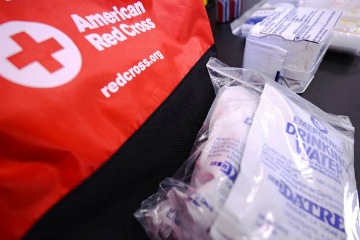
Households should build disaster kits with enough supplies for at least three days, including water (one gallon, per person, per day), nonperishable food, a flashlight, battery-powered or hand-crank radio, extra batteries, a first aid kit, a 7-day supply of medications, a multi-purpose tool, sanitation and personal hygiene items and copies of important personal documents. They should also have an emergency plan in which each person knows how to reach other members of the household. The plan should also include an out-of-area emergency contact person, and where everyone should meet if they can’t go home.

(Via: http://wspa.com/2017/04/04/severe-weather-tips-from-the-red-cross/)

If you are still clueless on what to prepare when you start making your own emergency kit, take these tips seriously. Your disaster “go-bag” should include food and water rations. Those two are the most important items since supermarkets will likely be closed and your money won’t have any value in a town ravaged by disaster. Store some bottled water, canned goods, energy and chocolate bars, and other ready-to-eat food that you can all safely consume without the need for cooking.

After addressing your eating needs, other aspects that need your attention are safety and security measures. Your kit should likewise include first aid like pills and medicines for wound dressing and some basic toiletries. A whistle is also helpful especially when there is widespread destruction and it can help others locate you while masks can protect you from too much dirt and dust. Maps are also helpful in navigation and a utility knife can work wonders in time of emergencies. A duct tape is also multi-functional and matches or lighters can help make fire. A radio and batteries can let you stay connected to the outside world. Torch lights are also a must at night especially for a widespread blackout. And lastly, secure your documents in ziplock bags and some cash because you’ll never know when you’ll need them again.

Whether for short-term or long-term survival, you need to cover all the basics if you want to survive any disasters in one piece. So, make your own emergency kit now and sleep soundly each night knowing you are ready whenever disaster strikes.

How To Prepare For A Disaster was first published on https://www.SEMP.us


source https://www.semp.us/how-to-prepare-for-a-disaster/